Nigeria’s solar boom cost and policy barriers: The Silent Saboteurs of Progress
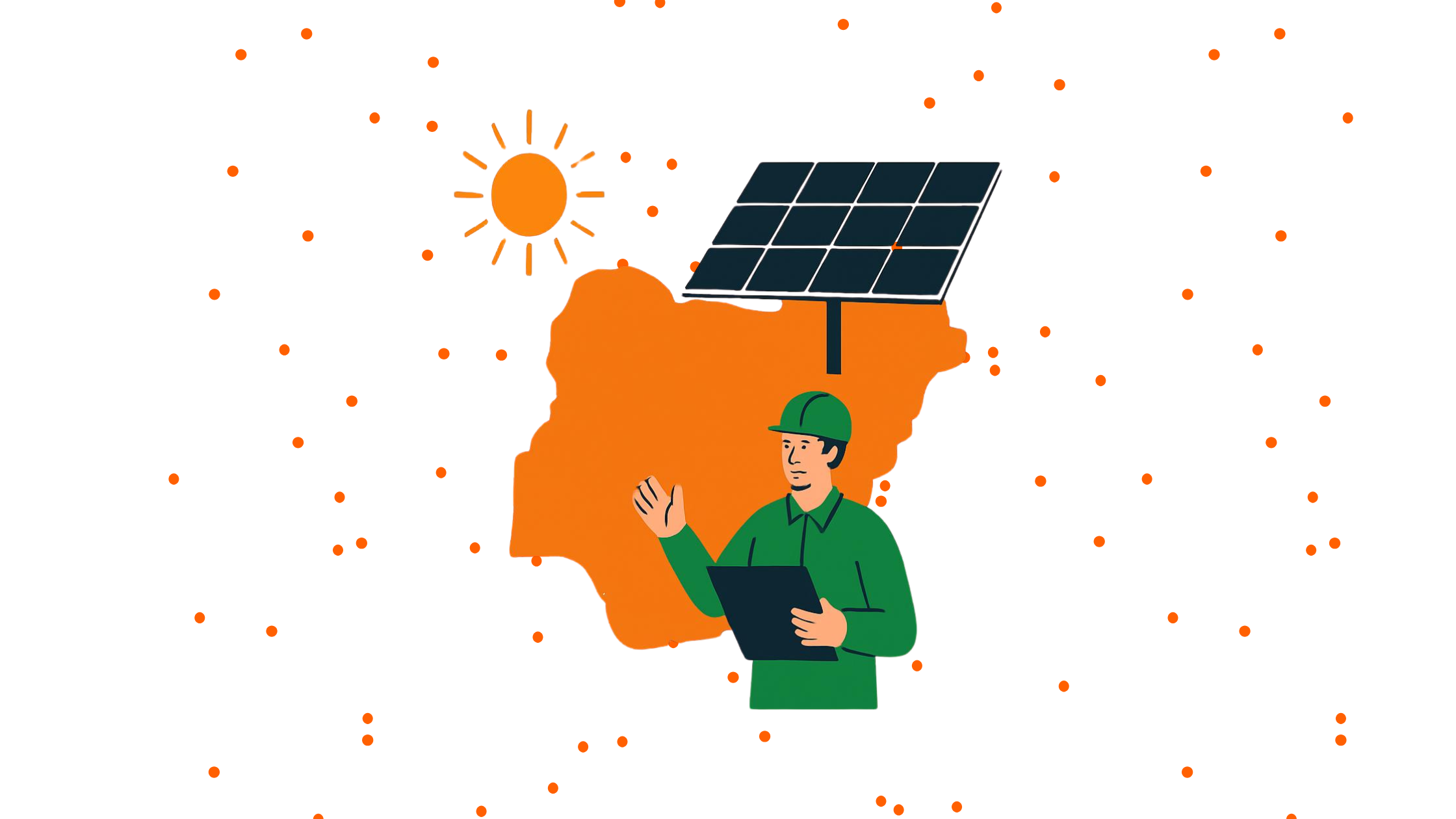
This article explores Nigeria’s solar boom, which isn’t just a trend, but an economic uprising against ₦209.50/kWh Band A tariffs and the volatile price of fuel.
Yet, for many Lagosians and business owners, the road to 24/7 power is blocked by a complex web of high installation costs and frustrating policy barriers. If you are waiting for the “perfect” moment to switch, the cost of delay is likely already higher than the cost of the hardware itself.
We’re diving into the reality of the energy landscape: what’s holding us back, and how you can leapfrog the hurdles to secure your autonomy.
Key Takeaways
→ Nigeria’s energy crisis costs businesses and households billions annually, making solar not a luxury, but a necessity.
→ High import duties, VAT, and a crashing naira inflate solar component costs by up to 40%, directly hitting your wallet.
→ Inconsistent government policies and a lack of enforcement create an unstable investment climate, deterring critical capital.
→ Access to affordable financing remains severely limited, locking out most Nigerians from solar adoption.
→ Despite the hurdles, strategic investment in solar offers immediate and long-term financial liberation from grid instability.
The Illusion of Affordability: Why Your Solar Quote Stings
Let’s be honest, solar in Nigeria is more expensive than it should be, and you’re paying the price.
The global cost of solar has plummeted by over 80% in the last decade, yet here, the financial burden remains stubbornly high.
This isn’t an accident; it’s a direct consequence of a tangled web of economic and regulatory inefficiencies.
Think about it:
Nigeria imports over 90% of its solar components. Each solar panel, inverter, and battery pack travels thousands of miles, accumulating costs at every turn.
Then, the real damage begins. Import duties, often ranging from 5% to 10% for various components, slap an immediate premium on your investment. Add a 7.5% Value Added Tax (VAT) on top of that, and suddenly, a system that should be affordable becomes a luxury.
Now consider this:
The naira’s brutal devaluation against major currencies like the dollar and euro acts like a continuous financial hemorrhage.
A solar system priced at $10,000 today might cost you ₦7.5 million, but if the naira slides further, that same system tomorrow could be ₦9 million or more.
This volatility makes long-term planning a nightmare for both consumers and installers, forcing everyone to bake in higher margins to mitigate risk. The result? You get less for more.
The reality is, a 5kW solar system that might cost $8,000 (around ₦6 million at current rates) in a more stable economy could easily set you back ₦8-10 million in Nigeria.
This isn’t just a number:
It’s a barrier that keeps millions trapped in the cycle of generator noise and exorbitant fuel costs. This isn’t just about the initial purchase; it’s about the total cost of ownership.
Every component, every spare part, every maintenance call is subject to the same inflationary pressures.
You’re not just buying solar; you’re buying into a system designed to extract maximum value at every choke point.
Nigeria’s Solar Boom Policy Paralysis: The Government’s Self-Inflicted Wounds
The Nigerian government talks a big game about renewable energy, but its policies often contradict its pronouncements.
This isn’t just frustrating:
It’s actively sabotaging the very industry it claims to support. A stable, predictable policy environment is the bedrock of any successful market, especially one requiring significant upfront investment. Nigeria consistently fails to provide it.
What most people miss is the inconsistency. One day, there’s talk of tax breaks for renewable energy. The next new tariffs or bureaucratic hurdles appear without warning. This flip-flopping creates massive uncertainty for investors.
Why would a major solar manufacturer or financing institution sink billions into a market where the rules can change overnight? They won’t. They’ll take their capital to more stable shores, leaving Nigeria to flounder.
And that’s exactly why local manufacturing remains nascent:
Without clear, long-term incentives and protection, setting up production facilities for solar panels or batteries in Nigeria is a financial suicide mission.
It’s cheaper and less risky to import, even with all the associated costs. This dependence on imports then feeds back into the cost problem, creating a vicious cycle.
Let’s look at specific examples:
The lack of a robust, enforceable net-metering policy is a prime offender. Net metering allows solar users to feed excess electricity back into the grid for credit, effectively turning their roof into a miniature power plant.
Without this, the financial incentive to oversize a system or even install one at all diminishes significantly.
Why generate more power than you immediately use if you can’t sell it back? This is a fundamental policy that drives solar adoption globally, and its absence here is a glaring oversight.
Furthermore, the enforcement of existing policies is often a joke:
Regulations exist on paper, but corruption, bureaucratic inertia, and a lack of political will mean they are rarely applied effectively.
This creates an uneven playing field, discourages legitimate businesses, and ultimately undermines consumer confidence. You can’t build a sustainable industry on a foundation of shifting sand and broken promises.
The Financing Famine: Capital Starvation in a Sea of Need
Even if you navigate the cost and policy minefield, securing financing for solar in Nigeria is like finding water in the desert.
The vast majority of Nigerians, both individuals and small businesses, simply do not have the upfront capital to purchase a solar system outright. This is where accessible financing becomes critical, and it’s precisely where the system fails.
Traditional banks in Nigeria are notoriously risk-averse, especially when it comes to long-term, non-collateralized loans.
Solar installations, while providing long-term savings, don’t fit their conventional lending models. Interest rates are prohibitively high, often exceeding 20-25%, making the payback period for solar unacceptably long.
Who wants to pay 25% interest on a system designed to save them money? It negates much of the financial benefit.
What most people miss is the lack of innovative financing models:
Globally, solar adoption is supercharged by initiatives like Power Purchase Agreements (PPAs) and lease-to-own options.
In a PPA, a third-party company installs and owns the solar system on your property, selling you the electricity at a fixed, often lower, rate than the grid.
You get clean energy without the upfront cost. These models are scarce, underdeveloped, and often unaffordable in Nigeria.
The government’s attempts at intervention have been largely ineffective:
Schemes like the Rural Electrification Agency’s (REA) initiatives are commendable in theory, but their reach is limited, and bureaucratic hurdles often slow down disbursement of funds.
Development banks and international financiers are hesitant, again, due to the policy instability and currency risks mentioned earlier.
Meanwhile, the average Nigerian household spends up to ₦50,000-₦100,000 monthly on fuel generators and grid electricity, a cost that could easily cover a solar loan repayment.
But without access to that initial capital, they remain trapped:
This isn’t just an economic issue; it’s a social justice issue, preventing millions from accessing reliable, affordable power and improving their quality of life.
The capital exists globally, but it’s not flowing to Nigeria in the quantities needed, and the reasons are clear.
The Grid’s Iron Grip: Discos and the Status Quo
The existing power distribution companies (Discos) possess a vested interest in maintaining the status quo, often at the expense of solar growth.
This isn’t a conspiracy theory; it’s basic economics. The more people adopt solar, especially off-grid solutions, the less revenue the Discos collect.
Their business model is built on selling grid electricity, and distributed solar directly competes with that.
Think about it this way:
Discos are notoriously inefficient, plagued by massive Aggregate Technical, Commercial, and Collection (ATC&C) losses, often exceeding 40%.
This means for every 100 units of electricity they purchase, they only bill for 60 units, and only collect payment for even less. Solar, by its very nature, bypasses these losses.
So what happens next?
Discos often resist net-metering policies, or make the application process so cumbersome and expensive that it discourages adoption.
They might impose arbitrary fees for grid connection, even for solar users, or delay approvals for installations. These are subtle, yet effective, ways to slow down the transition to renewables.
On the flip side:
The lack of reliable grid power ironically fuels the demand for solar. If the grid worked perfectly, the incentive for solar would be purely economic. But because the grid is so unreliable, solar becomes a necessity for survival.
This paradox creates a bizarre dynamic where the very failure of the Discos drives demand for a competing solution, which they then try to obstruct.
The reality is, a truly smart grid that integrates distributed solar seamlessly benefits everyone. It reduces strain on centralized infrastructure, improves grid stability, and provides cleaner power.
But achieving this requires significant investment, technological upgrades, and a fundamental shift in the Discos’ business model – changes they are often unwilling or unable to make.
Until their incentives align with widespread solar adoption, expect continued friction.
Navigating Nigeria’s Solar Boom Minefield: Your Path to Energy Independence
Despite these formidable barriers, achieving energy independence in Nigeria is not just possible; it’s becoming imperative.
The costs of inaction—the perpetual generator fuel, the lost productivity, the health impacts—far outweigh the challenges of adopting solar. You need a strategic approach to cut through the noise and secure your power future.
First, focus on reputable installers and quality components:
The market is flooded with cheap, low-quality solar systems that promise miracles but deliver headaches.
These systems fail prematurely, costing you more in the long run. Demand certifications, warranty information, and proof of installation experience.
This isn’t just about saving money; it’s about protecting your investment.
Second, understand your true energy needs:
Don’t over-spec or under-spec your system. A proper energy audit will tell you exactly what size system you need, optimizing your investment.
Every watt you save through energy-efficient appliances reduces the size and cost of your solar system.
This is where smart consumption meets smart investment.
Third, explore all available financing options, no matter how limited:
Some microfinance institutions or specialized green energy funds might offer better terms than traditional banks.
Look for installers who offer in-house payment plans or partnerships with financial institutions.
Sometimes, a combination of personal savings and a smaller loan can bridge the gap.
Crucially, advocate for policy change. Join industry associations, support NGOs working on renewable energy, and demand better from your elected officials.
While individual action is powerful, collective action can shift the policy landscape. Your voice, combined with others, can pressure the government to implement the necessary reforms.
And finally, consider the long-term gains:
The upfront cost of solar, while significant, is an investment that pays dividends for decades. You eliminate fuel costs, reduce your exposure to grid tariff hikes, and gain unparalleled reliability.
Calculate your payback period meticulously. For many, especially businesses, the return on investment can be surprisingly quick, sometimes as little as 3-5 years, after which your electricity is essentially free.
Conclusion
Nigeria’s solar boom faces a gauntlet of cost and policy barriers, but ignoring them is a luxury you can no longer afford.
The system is designed to extract, to complicate, and to maintain the status quo. But with ruthless optimization, strategic planning, and a clear understanding of the landscape, you can break free.
Solar energy is set to become the future of energy in Nigeria, and by embracing this shift, we can ensure a bright future for all. Despite the challenges, it is crucial to recognise the importance of this transition.
Stop paying rent on your electricity. Lock in 10 years of grid independence and let the sun pay your Band A bills.
Shop the article